Showing posts with label Security. Show all posts

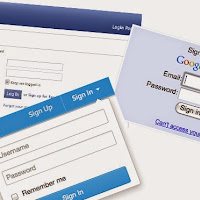
Facebook, Google, Twitter and thousands more websites’ Login Protocols Hacked –There is not any FIX for that!

Facebook, Google, Twitter and thousands more websites’ Login Protocols Hacked –There is not any FIX for that!

Facebook, Google, Twitter and thousands more websites’ Login Protocols Hacked –There is not any FIX for that!

--------------------------------------------------------------------------------------------------------------------
Facebook, Google, Twitter and thousands more websites’ Login Protocols Hacked –There is not any FIX for that!


After the world’s biggest data breach ‘Heartbleed,’ a different vulnerabilty has been discovered that could have allowed hackers to attack on your personal data and steal that.

A security flaw in the OAuth and OpenID online login protocols could be used to steal data and redirect users to malicious websites, CNET reports.
This Flaw dubbed “Covert Redirect,” which actually affecting users as a login pop-up based on affected site’s domain, and today, in most cases we are using login pop-up like if we want to log-in into a website through facebook so usually a pop-up opens for Authentication ‘OAUTH.’

Most Important:
This Flaw is not similar like phishing in which you can watch out your URL carefully, actually in this “Instead of using a Fake domain name, Covert Redirect flaw uses the real site address for authentication.”
Authorising the app will transfer your data to the attacker instead of reaching a legitimate site like Facebook or Google. Thus, personal data including email addresses, birth dates, contact lists and even control of the account could be given to hackers.

How to protect yourself?
You must close any of the suspicious-looking tabs that pop up demanding login credentials for Facebook, Google, Twitter, or any other Internet Services that use these open-source protocols.
The Covert Redirect exploit has been discovered by Wang Jing, a Ph.D student at the Nanyang Technological University in Singapore who already contacted Facebook about it. However, Facebook told him that while it “understood the risks associated with OAuth 2.0,” but fixing the bug is “something that can’t be accomplished in the short-term.” “Short of forcing every single application on the platform to use a whitelist,” a simple fix isn’t available.
Wang also contacted other popular sites like Google, Microsoft and LinkedIn, and each one giving him different answers.
Google: The matter was being tracked.
LinkedIn: it would publicly address it in a blog post.
Microsoft: We completed an investigation into the matter, and the security flaw has been discovered on a third-party site, not on one of its own.

WhiteHat Security founder and interim CEO Jeremiah Grossman agreed with Wang’s findings, but also with what Internet companies told him.
“While I can’t be 100 percent certain, I could have sworn I’ve seen a report of a very similar if not identical vulnerability in OAuth. It would appear this issue is essentially a known WONTFIX,” Grossman said. “This is to say, it’s not easy to fix, and any effective remedies would negatively impact the user experience. Just another example that Web security is fundamentally broken and the powers that be have little incentive to address the inherent flaws.”

Source: HackerNewsBulletin.com

Facebook users inadvertently hack themselves while trying to hack friends

Facebook users inadvertently hack themselves while trying to hack friends


Facebook users inadvertently hack themselves while trying to hack friends


Facebook users in India have been tricked into hacking their own Facebook accounts – while attempting to hack their friends accounts.

Facebook users inadvertently hack themselves while trying to hack friends
this is how spam looks like


The scam claimed to offer a tool to find out the Facebook passwords of friends, but instead compromised the user’s account by tricking them into using some code that takes control of their account and exposes their friends’ data in the process.

“What really happens when you paste this code into your browser console window is that a series of actions are performed using your Facebook account without your knowledge.

Also read: SCAM: Facebook user accounts are Hijacking by hackers in the name of FB Hacking Tool

"Behind the scenes, your account is used to follow lists and users, and give likes to pages in order to inflate the follower and like counts defined by the scammers,” explained Satnam Narang, a security response manager for Symantec in a blog post.
'Facebook hacking'

The scam employs an instructional video explaining “Facebook Hacking”, which linked to a Google document that contains some code.

The code allows users to see friends’ Facebook passwords, according to the scammers, with the instructions attempting to convince users to paste the code into their browser console window – a feature of most browsers that allows developers to inspect and modify elements of a website and how it is presented in the browser.

The instructions explain that the code will take two hours to work, belaying immediate suspicion when nothing happens to reveal the passwords of their friends.

In reality the code performs actions behind the scenes using the would-be hacker’s Facebook account, including following certain users and liking pages. No doubt the scammers are being paid to artificially inflate the follower or like counts of some users and pages.
'Playing off the curiosity of your friends'

The code also attempts to attract new targets through social engineering on Facebook.

“Your account is also used to tag the names of all your friends in the comment section of the original post. This is done to help the scam spread further, playing off the curiosity of your friends, who may visit the post to find out more and hopefully follow the instructions as well,” explains Narang.

The scam uses a variation of what is called self cross-site scripting (self-XSS), where a user is tricked into entering code into their browser’s console window that performs certain actions on their behalf.
'Allow my account to be hijacked if I paste malicious JavaScript'

Facebook is aware of the scam and has tried to discourage users from falling for it, employing a warning page that blocks scripted actions with an option to manually “allow my account to be hijacked if I paste malicious JavaScript”.

“There is a popular scam going around that claims the user will gain some benefit (illicit access to someone else's account, some new Facebook feature, etc) by pasting some piece of JavaScript into the browser's console,” said Facebook on its JavaScript console warning page.

“The code usually posts the same scam on other people's walls, and subscribes the user to pages controlled by the attacker – but it could do much worse things. To avoid this, the console is now gently disabled in some browsers,” Facebook continues.
'If it sounds too good to be true…'

This type of scam is not new, and was first seen circulating around Facebook in 2011. This scam variant was first seen at the beginning of the year, modified from the original code that saw great success with between 50,000 to 100,000 users falling victim.

The new scam originates from India, according to Symantec, based by the locations of pages and profiles users are tricked into liking as part of the scam.

Users who have been affected by the scam should use their activity log on Facebook to track the errant likes and friending, removing those that the scam artificially created and any post that could spread the scam further.

“Always remember that if it sounds too good to be true, it is. Being able to hack someone’s Facebook password by just pasting some code into your browser sounds way too easy and should signal that this is a scam,” concludes Narang.

ALSO read: Password secrets you must aware and http://www.technotification.com/

Hackers stealing Google account's passwords smartly through new phishing attack

Hackers stealing Google account's passwords smartly through new phishing attack

Hackers stealing Google account's passwords smartly through new phishing attack


Google account passwords have been stolenby hackers since the beginning of the Internet but as time passed they found,according to Bitdefender,newer and easier ways that are harder to catch with traditional heuristic detection.

Hackers took advantage on how Google Chrome displays their data(URIs-Uniform Resource Identifiers) in their phishing attack, although Mozilla Firefox users suffered from this aswell.

CatalinCosoi, Chief Security Strategist at Bitdefenderexplains what hackers aim for with this scheme:“With access to users’ Google accounts, hackers can buy apps on Google Play, hijack Google+ accounts and access confidential Google Drive documents.The scam starts with an email allegedly sent by Google, with “Mail Notice” or “New Lockout Notice” as a subject.”

Below you can see a photo of an e-mail that frauds use to trick users: “This is a reminder that your email account will be locked out in 24 hours. Due to not being able to increase your Email storage Quota.Go to the INSTANT INCREASE to increase your Email storage automatically.”

gmail phishing

What happens when clicking the INSTANT INCREASE link? Users are redirected to a Google login web page that imitates the authentic one and asks for their credentials.

“What is interesting about this phishing attack is that users end up having the “data:” in their browser’s address bar, which indicates the use of a data URI scheme,” continues Catalin Cosoi.

Schemers manage to include in-line data in web pages as if they were external resources by using Base64 encoding. Base64 encoding role is to represent file contents, supplying the content of the fake web page in an encoded string within the data URI.

It is hard for regular users to understand what is happening,as Google Chrome does not show the whole string so the cyber-criminals exploit their lack of knowledge.

These being said, it is common for scammers to pose as services that contact people by e-mail for announcements or notifications. Among phishers’ favorite disguises we have Google, Facebook, eBay, PayPal, phone services and financial institutions. The most recent attack wanted to access users’ Gmail credentials, by targeting Google Drive’s landing page.

Source: hackernewsbulletin.com

EBay Hacked, Change Your Password Now

Worlds most popular shopping  website ebay is got hacked .

Cyber-attackers compromised employee log-in credentials, allowing unauthorized access to eBay’s corporate network, the company said. Working with law enforcement and leading security experts, the company is aggressively investigating the matter and applying the best forensics tools and practices to protect customers.


Now, eBay is asking all of its users to change their password as a security measure, let’s see what has been compromised?

  1. Name
  2. Email Addresses
  3. Encrypted Passwords
  4. Physical Addresses
  5. Phone Numbers

Above are the details what has been compromised in the cyber-attack, and the most important thing is, financial data is safe (according to eBay.)

How the attack came to know?

Cyber-attackers reportedly used employee login credentials to gain unauthorized access to eBay’s corporate network and a database that contained the above compromised details. Database was compromised between late February and early March. eBay first detected the compromised employee log-in credentials two weeks ago

Users’ financial information was not stored in the database, as we said above, that’s why no-need to worry about any financial information.

We have seen no evidence of unauthorized activity on eBay but that users should still change their passwords, says eBay.


Support : Creating Website | Johny Template | Mas Template
Copyright © 2013. Technology Tips - All Rights Reserved
Template Created by Creating Website Published by Mas Template
Proudly powered by Blogger